

Clinically Reliable Tools for Accurate Hearing Assessment
At The Listening Lab, we supply a range of professional diagnostic and screening solutions designed to deliver accurate results in every clinical setting, from routine evaluations to advanced audiological assessments
Reputable Diagnostics

Audiometers (Screening & Diagnostic)
Clinical-grade systems for accurate air and bone conduction hearing assessments. Key capabilities include:
- Air and bone conduction audiometry
- Advanced masking and diagnostic test protocols
- Configurations suitable for comprehensive clinical evaluations
- Modular systems that may support additional diagnostic functions
Ideal for: Audiology clinics, ENT practices, hospitals, and specialised hearing centres.
Tympanometers (Middle Ear Analyzers)
Accurately assess middle ear function, eardrum mobility, and potential conductive issues. Key capabilities include:
- Identify the presence of fluid in the middle ear
- Scarring of the eardrum
- Ossicular chain abnormalities
Use cases: Ear infections, middle ear disorders, pre-fitting evaluations.
Otoacoustic Emissions (OAE) Devices
Fast, non-invasive screening tools for:
- Newborn hearing screening
- Paediatric assessments
- General hearing checks in community or hospital settings
We supply both TEOAE and DPOAE systems.
ABR / ASSR Systems (Electrophysiological Testing)
For clinics requiring advanced diagnostic capabilities, we offer systems designed for:
- Auditory Brainstem Response (ABR)
- Auditory Steady State Response (ASSR)
Suitable for difficult-to-test patients, paediatric cases, and comprehensive threshold estimation.
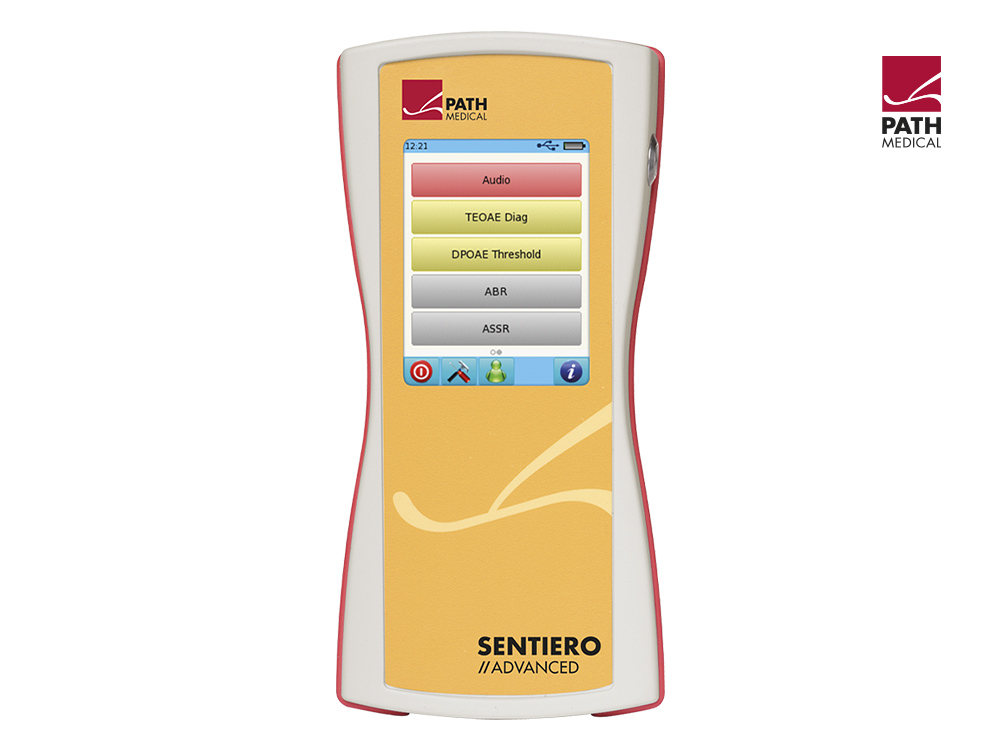
Sentiero Advanced
Modular platform for comprehensive audiology diagnostics
- AEP testing: ABR, ASSR, EcochG, EABR, VEMP
- OAE suite: TEOAE, DPOAE, DP Threshold, SOAE
- Audiometry: Air & bone conduction, speech tests
- Expandable modules across diagnostics and screening
Ideal for: Hospitals, ENT clinics, and advanced diagnostic centres
One platform supporting audiometry, OAE, and electrophysiology
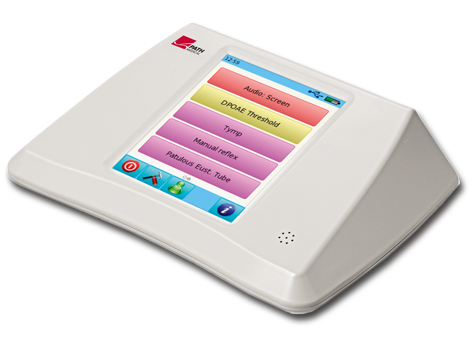
Sentiero Desktop
Compact modular system for everyday audiology and middle ear diagnostics
- OAE testing: TEOAE, DPOAE, DP Threshold, SOAE
- Audiometry: Air & bone conduction, speech tests
- Tympanometry (optional): Reflex, ETF, multi-frequency
- Modular platform – expand functions as needed
Ideal for: Clinics, hearing centres, and multi-room setups
Compact system combining audiometry, OAE, and tympanometry
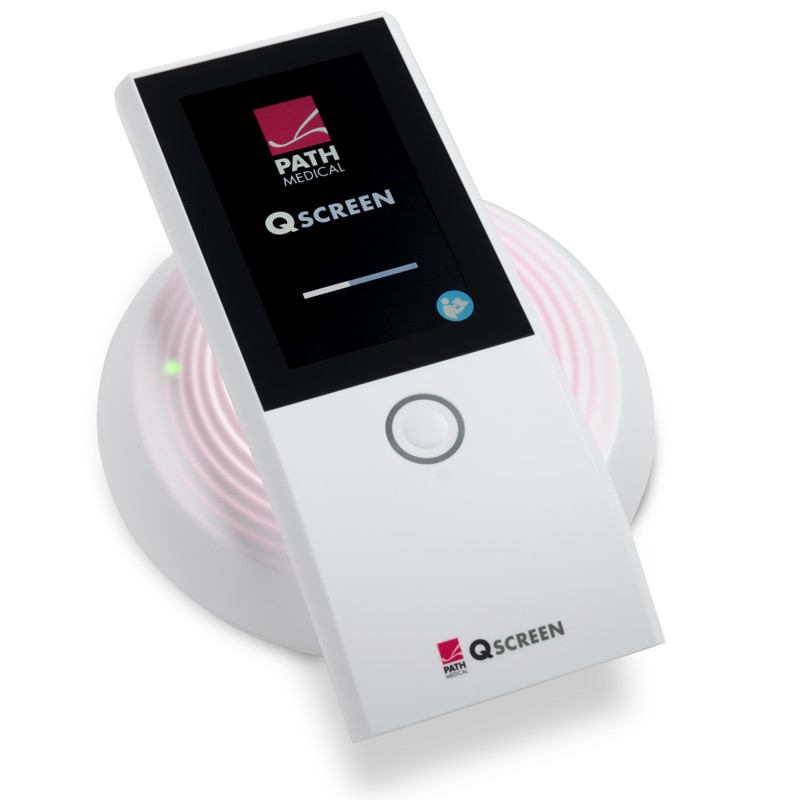
QScreen
Smart, portable screener designed for fast and reliable newborn hearing screening
- AABR & OAE screening in one device for complete screening workflows
- Fast, non-invasive testing ideal for newborns and young children
- Noise-cancelling probe for accurate results even in busy wards
- Seamless patient management with QR/barcode scanning
- Wireless, cable-free operation with charging dock and connectivity
Ideal for: Hospitals, maternity wards, paediatric screening programmes
Optimised for speed, accuracy, and high-volume newborn screening
Built for Modern Audiology
Partner With Us
Why Professionals Choose Us
Contact Us
Why Customers Love Our Solutions


It was an eye-opener for me. Her explanation was crystal clear, and the service rendered was calm and welcoming.


The hearing test was free, and it turned out to be much simpler and not scary at all. I also learned a lot about my hearing condition thanks to her detailed explanations.
Highly recommend Listening Lab, especially if you’re nervous about getting your hearing checked for the first time!

Frequently Asked Questions (FAQ)
1. What are Path Medical audiometers used for?
Path Medical audiometers are used for diagnostic hearing assessments, occupational hearing screening, paediatric evaluations, and clinical audiology testing. They support a range of tests including pure tone audiometry, immittance tests, electrophysiologic tests, and specialised hearing assessments depending on the model.
2. Are Path Medical audiometers suitable for both screening and diagnostic testing?
Yes. Path Medical offers both screening and diagnostic audiometers designed for ENT clinics, audiology practices, hospitals, occupational health providers, and hearing conservation programs. Different models are tailored to different clinical needs.
3. Which Path Medical audiometer is best for a private audiology clinic?
For most private clinics, a diagnostic audiometer with air & bone conduction, speech tests and middle ear testing capabilities is ideal. The best model depends on whether you require paediatric testing, tinnitus assessment, or advanced diagnostic features.
4. Do Path Medical audiometers support speech audiometry?
Yes. Many Path Medical diagnostic audiometers support speech audiometry, including live voice and recorded speech materials such as Spondees, NU-6, PBK-50, Maryland CNC or CID-W22 . This allows clinicians to evaluate speech recognition thresholds and speech discrimination performance.
5. Can Path Medical audiometers perform masking?
Yes. Diagnostic models support narrowband masking to ensure accurate threshold measurements during complex hearing assessments.
6. Are Path Medical audiometers compatible with NOAH software?
Path Medical audiometers integrate with NOAH, via PATH NOAH Connector, allowing clinicians to store patient data and streamline workflow integration.
7. Do Path Medical audiometers support paediatric audiology testing?
Yes. Certain models include child-friendly interfaces and specialised tests like MAGIC suitable for paediatric assessments and conditioned play audiometry workflows.
8. How often should a Path Medical audiometer be calibrated?
Audiometers should generally undergo annual calibration to maintain testing accuracy and comply with local clinical standards and regulations. Biological checks should also be performed regularly between calibrations.
9. Can Path Medical audiometers be used for occupational hearing screening?
Yes. Path Medical screening audiometers can be used in occupational health programs for workplace hearing conservation and baseline hearing assessments.
10. What types of transducers are compatible with Path Medical audiometers?
Depending on the model, Path Medical audiometers can support insert earphones, supra-aural headphones, circumaural headphones, and bone vibrators for comprehensive testing flexibility.
11. Are Path Medical audiometers portable?
Path Medical audiometers are lightweight and portable, making them suitable for mobile hearing screening, schools, community outreach programs, and occupational testing environments.
12. Can Path Medical audiometers generate printable reports?
Yes. Path Medical’s MIRA software supports digital record keeping and printable test reports for patient documentation and referral purposes.
13. Do Path Medical audiometers support tinnitus assessment?
Certain advanced diagnostic models include tinnitus evaluation tools to match the perceived tinnitus in both frequency and level. Tuning is possible down to a resolution of 0.1 Hz and output to step size of 1 dB.
14. What is the difference between a screening and diagnostic audiometer?
Screening audiometers are designed for fast pass/fail hearing checks, while diagnostic audiometers provide detailed threshold testing, masking, speech testing, and advanced clinical assessment features.
15. Are Path Medical audiometers suitable for hospitals and ENT clinics?
Yes. Path Medical audiometers are used in hospitals, ENT departments, audiology centres, and hearing clinics where reliable and accurate hearing assessment equipment is required.
16. What maintenance is required for a Path Medical audiometer?
Routine maintenance includes annual calibration, regular biological listening checks, cleaning of transducers, and cable inspection.
17. Are Path Medical audiometers easy to use for clinicians?
Yes. Path Medical systems are designed with clinician-friendly interfaces to improve workflow efficiency and reduce testing time while maintaining diagnostic accuracy.
18. Why do audiologists choose Path Medical audiometers?
Audiologists choose Path Medical audiometers for their reliability, flexibility to add test modules when required, portability, and suitability across screening and diagnostic applications.